Select a site alphabetically from the choices shown in the box below. Alternatively, browse sculptural examples using the Forward/Back buttons.
Chapters for this volume, along with copies of original in-text images, are available here.


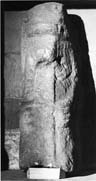
Object type: Part of hogback [1]
Measurements: L. 76.2 cm (30 in); W. 24.2 cm (9.5 in); D. 27.4 cm (10.75 in)
Stone type: Medium-grained, massive pale yellow sandstone
Plate numbers in printed volume: Pl. 32.167, 32.169
Corpus volume reference: Vol 1 p. 62-63
(There may be more views or larger images available for this item. Click on the thumbnail image to view.)
Just over half survives, type uncertain. The ridge is flat and there is no sign of ornament. The ridge issues from the jaws of the beast; its paws with four long claws clasp the ridge nearly at the crown of the monument. It is not clear whether the two prominent legs and paws are back legs or front, but on either side there appear to be two vestigial legs under the jaw which might be the front legs. The creature has long jaws with a very prominent raised muzzle, and the eyes or ears are set well back; they are round with hollowed centres. A rough slashed dressing seems to indicate the body pelt.
This piece seems a crude copying of the type represented more elegantly at Brompton, Yorkshire. There is no sign of interlaced embellishments or a niche. It seems to be a rather poor reflection of the Tees valley group.
