Select a site alphabetically from the choices shown in the box below. Alternatively, browse sculptural examples using the Forward/Back buttons.
Chapters for this volume, along with copies of original in-text images, are available here.


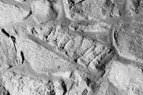
Object type: Decorated fragment
Measurements: L. 32 cm (12.6 in); W. 12 cm (4.7 in); D. Built in
Stone type: Sandstone, pale yellow-brown, fine to medium grained, quartzose and quartz cemented. Carboniferous, Namurian, Millstone Grit Group
Plate numbers in printed volume: Ill. 59
Corpus volume reference: Vol 12 p. 128
(There may be more views or larger images available for this item. Click on the thumbnail image to view.)
The narrow and tapering surviving decorated surface offers a slice through a layout of strands, within which no coherent pattern can be discerned. Just possibly, the wider end of the stone may represent an original edge and the first two or three 'strands' a complex moulded border. Other strands appear to curve within the short distance available and may be part of interlacements or scrolls within the decorated field.
This item in itself offers too limited a basis for categorization. Just possibly it was part of the same monument as Normanton 2 (Ill. 60), since their petrology is very similar; but the decoration on that item, though slightly more intelligible, is scarcely more informative in respect of monument type or date. Both items 1 and 2 may share the same origin as a larger, rectangular stone built into the south face of the crossing tower externally, west of and below the lower belfry window. This is recycled in fabric of similar thirteenth-century date and looks to have a similar petrology; its size and regular shape suggest a section of a shaft, but it is out of the reach of close examination and its appearance of very worn decoration is illusory and probably an effect of its petrology.
The use here of Millstone Grit is interesting. It most commonly occurs in the Trent valley and the wider north-east Midlands as re-cycled Roman stone, and we should consider its likely source: whether a local Roman site of some pretention, or brought by river transport networks from York (see Southwell 2 and perhaps Stapleford 1), or brought overland via the Fosse Way (see Hickling 1). Normanton's location right on the Soar and just down from its confluence with the Trent certainly favours the river transport option. But on the western and south-western fringes of the Pennines, Millstone Grit is the regular stone for the rash of minor, later pre-Norman sculpted crosses (e.g. Pape 1945–6). Pape proposes Alstonefield on the upper Dove as a possible quarry source for the Staffordshire examples he discusses (ibid., 49), and the unprepossessing decoration glimpsed on the Normanton pieces might fit within the mixed repertoire found on those items.
The reuse of these fragments in thirteenth-century fabric, which was initiated when the advowson was transferred to Durham Cathedral Priory (Cox 1912a, 148), seems to guarantee their early date, which their decoration only hints at. Until the large and 'sorely needed' restoration of St James's church in 1889 (ibid.), the pieces in the interior nave wall were probably hidden behind plaster, keying for which may have contributed to the condition of their surfaces.
