Select a site alphabetically from the choices shown in the box below. Alternatively, browse sculptural examples using the Forward/Back buttons.
Chapters for this volume, along with copies of original in-text images, are available here.


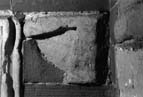
Object type: Cross-head fragment [1]
Measurements: H. 22.5 cm (8.85 in) W. 28.3 cm (11.1 in) D. Built in
Stone type: Fine-grained deltaic sandstone with well sorted, sub-angular grains. Very pale brown (10YR 8/4) with diffuse yellow patch (10YR 7/6). Upper Carboniferous sandstone from the area of the river Tees valley, west of Piercebridge
Plate numbers in printed volume: Ill. 1137
Corpus volume reference: Vol 6 p. 278
(There may be more views or larger images available for this item. Click on the thumbnail image to view.)
A plate-head cross (type 5), with two arms surviving and one quarter segment of the plate.
A (broad) : The cross is type B6 with wedge-shaped arms and V-shaped arm-pits. The plate is recessed from the face of the cross. There is no decorative carving on the piece.
Appendix A item (stones dating from Saxo-Norman overlap period or of uncertain date).
There is no diagnostic stylistic evidence for dating this cross. Plate heads are common in the area, notably at Brompton, but the cross type is one that extends from Anglo-Scandinavian times well into the twelfth century, like two at Whitby Abbey (Ills. 1168–71, 1176–9). Compare Hinderwell 1 (Ills. 1143–4).
