Select a site alphabetically from the choices shown in the box below. Alternatively, browse sculptural examples using the Forward/Back buttons.
Chapters for this volume, along with copies of original in-text images, are available here.


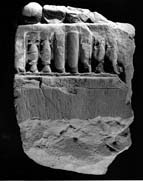
Object type: Part of baluster frieze reused as grave-stone
Measurements: H. 38.7 cm (15.5 in); W. (of plinth) 26 cm (10.5 in), (of baluster) 29.3 cm (11.5 in); D. 12.6 > 9.7 cm (4 > 3 in)
Stone type: Medium-grained, micaceous yellow sandstone
Plate numbers in printed volume: Pl. 102.544-546, 102.549
Corpus volume reference: Vol 1 p. 120
(There may be more views or larger images available for this item. Click on the thumbnail image to view.)
B (narrow): Broken.
C (long): Roughly tooled with an adze.
D (narrow): Tooled with a claw chisel.
This appears to be part of a baluster frieze like 25-6, recut for an eighteenth-century grave-stone.
