Select a site alphabetically from the choices shown in the box below. Alternatively, browse sculptural examples using the Forward/Back buttons.
Chapters for this volume, along with copies of original in-text images, are available here.


Object type: Hogback [1]
Measurements: L. 122 cm (48 in); W. 30.5 cm (12 in); D. 36.8 > 33 cm (14.5 > 13 in)
Stone type: Medium-grained, slightly micaceous, reddish-yellow (7.5YR 6/6) sandstone; deltaic channel sandstone, Saltwick Formation, Aalenian, Middle Jurassic; perhaps from Aislaby, near Whitby (see Fig. 5)
Plate numbers in printed volume: 597-600
Corpus volume reference: Vol 3 p. 170
(There may be more views or larger images available for this item. Click on the thumbnail image to view.)
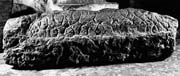
Hogback, type e, the dragonesque type.
Part of the ridge issues from the jowl of the end beast, one of which survives as a mask on the top of the stone. The ears are cut away, leaving a prominent brow. Circular eyes are crudely incised and an incised line crosses the base of the jowl. There are four legs. The ornament on each of the long sides is different, and the low side walls are plain.
A (long): A crudely incised line delineates the faint remains of tegulae.
B (end): Broken away.
C (long): A run of debased interlace in stopped-plait technique, made up of interlocking L-shaped elements, forming a three-strand plain plait which appears to expand irregularly towards the broken end.
D (end): Roughly dressed.
A dragonesque hogback of very poor workmanship, it has features relating it to other eastern Yorkshire examples. It is a poor copy of more assured pieces in the region.
