Select a site alphabetically from the choices shown in the box below. Alternatively, browse sculptural examples using the Forward/Back buttons.
Chapters for this volume, along with copies of original in-text images, are available here.


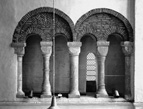
Object type: Sixteen baluster shafts
Measurements:
a: H. 57.5 cm (22.6 in); Diameter 26.7 cm (10.5 in)
b: H. 83.3 cm (32.8 in); Diameter 26.7 cm (10.5 in)
c: H. 75 cm (29.5 in); Diameter 25.4 cm (10 in)
d: H. 69.3 cm (27.3 in); Diameter 26 cm (10.25 in)
e: H. 63.5 cm (25 in); Diameter 26 cm (10.25 in)
f: H. 77.5 cm (30.5 in); Diameter 26 cm (10.25 in)
g: H. 58.4 cm (23 in); Diameter 26 cm (10.25 in)
h: H. 82 cm (32.3 in); Diameter 26.6 cm (10.5 in)
i: H. 68.6 cm (27 in); Diameter 26.6 cm (10.5 in)
j: H. 71.8 cm (28.3 in); Diameter 26.6 cm (10.5 in)
k: H. 67.3 cm (26.5 in); Diameter 27.3 > 26 cm (10.75 > 10.25 in)
l: H. 73.6 cm (29.0 in); Diameter 28.6 > 27.3 cm (11.25 > 10.75 in)
m: H. 54.6 cm (21.5 in); Diameter 23.5 > 21.6 cm(9.25 > 8.5 in)
n: H. 66.0 cm (26.0 in); Diameter 23.5 > 21.6 cm(9.25 > 8.5 in)
o: H. 68.0 cm (26.75 in); Diameter 25.4 cm (10 in)
p: H. 71.0 cm (28 in); Diameter 25.4 cm (10 in)
(assembled dimensions):
a-b: 141.6 cm (in) (junction < 0.8 cm (0.3 in))
c-d: 145.6 cm (in) (junction < 1.5 cm (0.6 in))
e-f: 142.2 cm (in) (junction < 1.5 cm (0.6 in))
g-h: 142.4 cm (in) (junction < 3.0 cm (1.2 in))
i-j: 141.8 cm (in) (junction < 1.4 cm (0.5 in))
k-l: 142.2 cm (in) (junction < 1.3 cm (0.4 in))
m-n: 121.6 cm (in) (junction < 1.0 cm (0.4 in))
o-p: 141.2 cm (in) (junction < 2.2 cm (0.9 in))
Stone type: Yellowish-grey, medium- to coarse-grained, oolitic limestone, with numerous well-developed calcite veins; Combe Down Oolite, Great Oolite Formation of Bath area, Great Oolite Group, Middle Jurassic
Plate numbers in printed volume: Fig. 34; Ills. 376-96
Corpus volume reference: Vol 4 p. 236-240
(There may be more views or larger images available for this item. Click on the thumbnail image to view.)
The sixteen individual baluster shafts are assembled into eight small columns, each carefully put together, some in such a way that there is good reason to suppose that this is how they were meant to be assembled. In each case the top and bottom mouldings of the assembled column can be understood as a capital and a base; in no case do two such mouldings meet in the middle. The balusters are described in the pairs in which they are assembled. They can be divided into six types.
Type i (Ills. 381–4): Columns a–b and c–d are of the same general type as assembled. If the four balusters are considered separately, each has the bulbous moulding in common, say as a 'capital', but the 'bases' would then be different, since c–d would each end in a half-round band, b in a complete band, and a as a plain shaft without any moulding.
The almost invisible, narrow junction between a and b, and the fine stone-coloured mortar with which the two parts are fitted together, are quite different from the way in which the Norman shafts in the triforium arcades, when composed of more than one stone, have been fitted together. In almost every case the top and bottom edges of the individual stones of the Norman balusters are rough, the mortar is coarse (a mixture of dark yellow pebble and chalk) and the mortar courses are normally between 3 and 5 cm thick. All the Anglo-Saxon balusters except a–b are joined by yellow mortar of this Norman type. On a–b the junction is above the bulbous central moulding of b (Fig. 34); the diameters of the two shafts are the same. It would thus seem likely that this Anglo-Saxon column was reused here with its two parts still assembled as they had been at a pre-Norman stage in their life. The end mouldings of the two shafts are almost identical, and the other mouldings on both shafts are similar.
The junction between c and d is in the middle of the moulded central band (Fig. 34). The end mouldings are of the bulbous type similar to those on a–b. The bottom mouldings of b and d are virtually identical. The mid-shaft mouldings on c and d are similar, but not as alike as those on a and b. The diameter of c is less above the mid-shaft moulding; below this moulding, it has the same shaft diameter as d. The assembled column is harmonious, but each element could stand alone.
Type ii (Ills. 385–6). Column e–f is the only one of this type. As assembled, its 'capital' is slightly more elaborate and larger than the 'base'. Both are of the sagging ('base') or lifted ('capital') type. No other baluster from this site has these end mouldings. If the two shafts are looked at individually, they have the bulbous moulding in common, say as a 'capital', but the 'bases' would be different, f ending in a narrow stepped moulding and e as a plain shaft.
The junction between e and f is above the stepped central moulding of f (Fig. 34). The end and the mid-shaft mouldings are similar, and the diameters of the shafts are the same. The two baluster shafts fit well together. The shafts would not have worked with any other shaft, because the only other shaft with a similar mid-shaft moulding is j, but here the moulding acts as the top of the splayed base, and neither e nor f would combine with j in a harmonious way.
Type iii (Ills. 387–8, 395–6): Columns g–h and o–p are of this type, although they are not identical and the shaft diameters are different, o–p being more slender than even the shorter shaft g. The 'bases' are concave with a complex upper band. The main difference is that g–h has a bulbous mid-shaft moulding, while o–p is plain. If the four baluster shafts are looked at individually, they have the end mouldings in common, say as 'capitals', but h alone would have a 'base' moulding. The four shafts could not be fitted to any other shaft without the resulting column being unduly short or long, or without bringing the mouldings out of harmony (as would be the case, for example, with g combined with b, or a with h).
The junction of g and h is above the bulbous central moulding on h (Fig. 34). The shafts are otherwise plain, but their diameters are different, as are the mouldings and diameters of the ends. The junction of o and p is in the middle of the two plain shafts. The shaft diameters are the same, but the end mouldings differ.
Type iv (Ills. 389–90): Column i–j is of this type. Diagnostic are the long tapered 'capital' and 'base' with a bottom band and a fairly simple top/bottom moulding. The 'capital' and 'base' are not identical, the 'base' being the simpler. No other balusters have this type of moulding. The two parts seem to belong together.
The junction of i and j is above the bulbous central moulding on j. The top and bottom mouldings are similar in character, but different in detail, the lower half of j being a splayed 'base' or 'capital'. There are no mid-shaft mouldings, because the apparent mid-shaft moulding on j is in fact the top of a slightly splayed 'base' moulding. The shaft diameters are the same.
Type v (Ills. 391–2): Column k–l is of this type. Diagnostic are the compact, fairly simple 'capital' and 'base'. The two parts are quite alike, the shafts tapered, and the junction is in the central moulding. The two shafts seem to belong together.
The junction is in the middle of the bulbous central moulding: compare c–d (Fig. 34). The top and bottom mouldings are similar but differ in detail. The shafts each become wider towards the bottom in such a way that the bottom diameter of k is the same as the top diameter of l.
Type vi (Ills. 393–4): Column m–n is of this type. It is smaller than all the others. The 'capital' and 'base' are virtually identical, the difference being a subtle turning in at the top of the 'capital', and a turning out at the 'base'. These would indicate that the 'capital' and 'base' were meant to be in this particular relationship, unlike the ambiguity of comparable features on several of the other columns. Furthermore, the two carinated shafts are identical and show that m has not been cut down, but was meant to join with n as assembled.
The junction is above the moulding at the top of n (Fig. 34). The two end mouldings are similar, and the shafts are both shorter than normal and have, uniquely, a sharp central carination. The diameters of both are the same, at the narrowest and widest points. These balusters belong together.
With the exception of a–b, which has a narrower junction than any of the others and is filled with a different mortar (see Description) the individual baluster shafts are fitted together with joints between 1–3 cm in width, filled with the yellow mortar of 'Norman' type. This method of joining the Anglo-Saxon balusters is quite different from the joining of the Norman shafts in the triforium arcades, which have joints normally 3–5 cm in width. Extra care has clearly been taken in fitting the Anglo-Saxon shafts together. It can be argued on independent and different criteria that a–b, i–j, k–l, and m–n are now assembled as they were intended to be assembled by the Anglo-Saxon masons. The other four are on balance probably also in their intended Anglo-Saxon relationship, but the reasons for supposing this are not individually as strong as for the other four.
Seven of the assembled columns are broadly similar, but m–n is part of another scheme, being when assembled 19.6 cm smaller than o–p, the shortest of the larger group. If the baluster shafts are looked after individually, m, at 54.6 cm (21.5 in), is 2.9 cm (1.1 in) shorter than the shortest of the remainder, a, while n, at 66 cm (26 in) in height, is the fifth shortest.
If the heights of the individual (i.e. disassembled) baluster shafts are compared to the sample of 102 shafts surviving from the co. Durham sites of Egglescliffe, Greatham, Hart, Monkwearmouth, and Jarrow, and from the Old Minster at Winchester, shaft m from this site is sixty-sixth out of 102 in length (whether broken or unbroken) and b, c, f, h, and l are taller than any of the others. The tallest, b, is 10.3 cm taller than the tallest baluster shaft from Jarrow. The same group of 102 shafts can also be ranked by diameter, which is at least as interesting since there are more fragments with complete or calculable diameters than there are complete heights. The smaller diameters of shafts m and n from the present site are joint thirty-sixth and thirty-seventh of 91 diameters (measurable or reconstructible); those from the Old Minster, Winchester, hold seventy-seventh to ninety-first place, larger than Jarrow, which covers sixtieth to seventy-sixth place. The smallest of the Winchester Old Minster shafts (no. 19), with a diameter of 32 cm (12.6 in), is only 3.2 cm (1.25 in) larger than the largest St Albans baluster shaft, l, but the remainder from the Old Minster have diameters between 38 and 51.2 cm (15 to 20.2 in), and must be seen as deriving from full sized columns rather than small columns or colonnettes as here. The diameters of the Old Minster shafts are almost all calculated from fragments; ideally they (and the other balusters) should have been compared to the fragments found in the excavation of the monastic buildings at Monkwearmouth, but these are not included in Corpus I (Cramp 1984, i, 129).
The lack of weathering on the St Albans balusters suggests that they stood inside the church or, if used as mid-wall shafts, in sheltered positions. Neale compared them to those found by Scott in St Mary in Castro at Dover (nos. 2–3; Ills. 64–7, 71–5), and also to shafts from Ely, where 'Fragments of similar balusters were recently discovered . ., with mouldings of the same character as at St Albans . .' (Neale 1877, 26). The St Albans baluster shafts are unlike the Jarrow and Monkwearmouth shafts, and more like the Dover balusters (a point also made by Baldwin Brown (Brown 1925, 264–6)), and the mouldings are similar to some of the tenth-century Winchester mouldings (e.g. Old Minster, nos. 10, 11, 12, 15, 18); Neale alone compares them with Ely. There is no reason to associate them with king Offa of Mercia's refoundation of the St Albans community in 793; it is more likely that they are later, perhaps from the tenth century. An earlier date cannot, however, be excluded.
All previous commentators have assumed that the balusters from this site are Anglo-Saxon in date and not spolia reused from the Roman city of Verulamium, despite the statement in Gesta Abbatum (Riley 1867–9, i, 24–8) that abbots Ealdred and Eadmer (both of whom probably held office in the first half of the eleventh century) collected materials from Verulamium towards the rebuilding of the abbey. Dr T. F. C. Blagg comments as follows on the character of the St Albans balusters in relation to pieces of comparable size from Romano-British buildings:
"The techniques of workmanship are similar to those found on many Romano-British columns carved in oolitic limestone. The profiles are sharply cut, and the surfaces show the rilling typical of pieces which have been finished on a lathe. While the bold single mouldings of the capitals and bases of a–f would be unusual on Roman columns from southern Britain, most of the more complex mouldings of the remainder are not so different from the fairly wide range of variation in Romano-British profiles. Columns of this miniature size (20–30 cm in diameter) were used in the porticoes of villas and temples (standing on a low wall), as table supports, and possibly in window openings.
"It would, however, be unusual to find such a variety of profiles on any one Roman site among columns otherwise so similar in size and execution. Moreover, there are two features which together rule out a Roman date quite firmly. First, the mouldings of Romano-British column capitals are invariably surmounted by a square abacus, and bases of this size were nearly always carved integrally with a square plinth; none of these baluster shafts has either. Second, Romano-British columns do not have mid-shaft mouldings. It is usual for a capital to have an astragalus, a ring of small mouldings a short distance below the main profile. Here, that feature is only to be seen on i–j. The intermediate mouldings are therefore quite uncharacteristic of Roman work."
