Select a site alphabetically from the choices shown in the box below. Alternatively, browse sculptural examples using the Forward/Back buttons.
Chapters for this volume, along with copies of original in-text images, are available here.


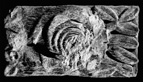
Object type: Architectural fragment, in two joining pieces
Measurements: H. 18.5 cm (7.25 in); W. 35.5 cm (14 in); D. 28.5 cm (11.25 in)
Stone type: Medium-/fine-grained, micaceous white sandstone (Carboniferous)
Plate numbers in printed volume: 660–3
Corpus volume reference: Vol 2 p. 170
(There may be more views or larger images available for this item. Click on the thumbnail image to view.)
Only one carved face survives; the others have been recut. The carving is deeply cut.
A (long): Part of a large-scale plant-scroll. On the left is an elaborate leaf-flower with bunched stamens or fruit; its stem is coiled tightly and another leaf-flower emerges from the coils. This has a cluster of three oval, scooped leaves, with two similar leaves filling the space below.
Appendix A item (stones dating from Saxo-Norman overlap period or of uncertain date).
This curious piece could be part of a frieze, or lintel, but since it has been cut down to form a building stone its original function is not clear. The lush plant forms can be paralleled at Cumwhitton (no. 1) and at Bridekirk, where they are Romanesque in date (Calverley 1899a, pl. facing 71).
