Select a site alphabetically from the choices shown in the box below. Alternatively, browse sculptural examples using the Forward/Back buttons.
Chapters for this volume, along with copies of original in-text images, are available here.


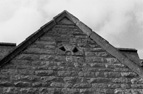
Object type: Cross-head
Measurements: H. c. 20 cm (8 in); (W. c. 40 cm (16 in); D. Built in
Stone type: Inaccessible, but appears to be of greyish-yellow oolitic limestone, with weathered-out thin ridges; possibly Taynton stone or Bath stone, Great Oolite Group, Middle Jurassic
Plate numbers in printed volume: Ill. 406
Corpus volume reference: Vol 4 p. 245
(There may be more views or larger images available for this item. Click on the thumbnail image to view.)
Appendix A item (stones dating from Saxo-Norman overlap period or of uncertain date).
This piece could either have come from a small memorial cross, or a larger standing cross. Its ring form points to a late date, as Collingwood has suggested that this form was introduced to England from the Celtic west by Scandinavian settlers in the early tenth century (Collingwood 1927, 137–9, fig. 153). The angular nature of the piece suggests a date late in the sequence of ring-heads; Collingwood, on these grounds, has suggested a post-Conquest date for a cross of very similar form from St Crux, York (ibid., 93–4, fig. 15). Similar crosses are encountered from the late twelfth-century Canon's cemetery at Old Sarum. Confirmation of a late date for this piece derives from archaeological evidence for the date of deposition of an almost identical cross-head from Glastonbury Tor, Somerset. This came from a context containing pottery of c. 100–c. 1200 (Rahtz 1971, 31, 48, fig. 21).
