Volume 4: South-East England
Select a site alphabetically from the choices shown in the box below. Alternatively, browse sculptural examples using the Forward/Back buttons.
Chapters for this volume, along with copies of original in-text images, are available here.
Current Display: Stoke D'Abernon 01, Surrey 

Overview
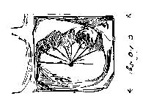
Object type: Sundial [1]
Measurements: H. c. 30 cm (11.8 in); W. c. 30 cm (11.8 in); D. Unobtainable
Stone type: Calcareous sandstone
Plate numbers in printed volume: Ill. 216
Corpus volume reference: Vol 4 p. 185
(There may be more views or larger images available for this item. Click on the thumbnail image to view.)
Present Location
Destroyed. Formerly built externally into the south wall, east of the south door
Evidence for Discovery
First recorded by Baldwin Brown in 1900 (Brown 1900b). The dial fell and was shattered in 1933; former position now marked by circular modern stone.
Church Dedication
St Mary
Present Condition
Destroyed
Description
On a square stone is a high-relief circular dial, the lower part of which is extensively damaged. There is a small central gnomon hole. The lower part of the dial is calibrated using incised lines, there being a pair of horizontals, a vertical, and three equally-spaced lines between each horizontal and the vertical.
Discussion
The dial was built into a wall which was substantially pre-Conquest in date, apart from later fenestration. Presumably it was an original feature. The form of the dial, a circular dial projecting from a rectangular stone, was certainly popular in the late pre-Conquest period, occurring at the following Hampshire sites: Winchester St Michael 1 (Ill. 671); Warnford 1 (Ill. 478); and Corhampton 1 (Ill. 438). The calibration of the dial is also consistent with a pre-Conquest date.
Date
Stones dating from Saxo-Norman overlap period or of uncertain date in eleventh century
References
Brown 1900b, 337; Gatty 1900, 68 - 9, fig. on 68; Johnston 1900b, 78, fig. 21; Malden 1905, 447; Johnston 1907, 16 - 17, fig. 4; Johnston 1913, 65; Green 1928, 504; Cox and Johnston 1935, 165, 193; Zinner 1939, 8; Zinner 1964, iii, 190; Taylor and Taylor 1965 - 78, ii, 574; Taylor and Taylor 1966, 25; Tweddle 1986b, i, 84 - 5, 189, ii, 493, iii, fig. 55
D.T.
Endnotes
