Select a site alphabetically from the choices shown in the box below. Alternatively, browse sculptural examples using the Forward/Back buttons.
Chapters for this volume, along with copies of original in-text images, are available here.


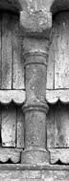
Object type: Two baluster shafts (c)
Measurements: Unobtainable
Stone type: Greenish-grey, fine-grained quartzose sandstone, highly glauconitic (0.1-mm grains) and slightly micaceous; Upper Greensand, Gault Group, Lower Cretaceous; Eastbourne vicinity
Plate numbers in printed volume: Ills. 229-30
Corpus volume reference: Vol 4 p. 192
(There may be more views or larger images available for this item. Click on the thumbnail image to view.)
Appendix A item (stones dating from Saxo-Norman overlap period or of uncertain date).
The west tower at Jevington is broad and rather squat with dressed stone quoins, which suggests a post-Conquest date. The appearance of the north and south belfry windows before their radical modification in 1873 supports this view, as they originally had angle-shafts as well as the existing freestanding balusters (Brown 1925, 461). Nonetheless, the latter do resemble elaborately moulded pre-Conquest examples, such as those at St Augustine's Abbey, Canterbury (nos. 6 –7; Ills. 41–9) or St Mary in Castro at Dover (nos. 2–3; Ills. 64–7, 71–5). The major significant difference lies in the fact that the Kentish shafts expand towards the mid-point, and taper towards the base and capital. It remains possible, however, that the Jevington examples are pre-Conquest material reused in an early Romanesque context, like the shafts from St Albans, Hertfordshire (no. 1; Ills. 376–96).
